 eSiddhi
160 GSM vs 180 GSM T-Shirts: Which One Is Right for You?
eSiddhi Team · 2 June 2026
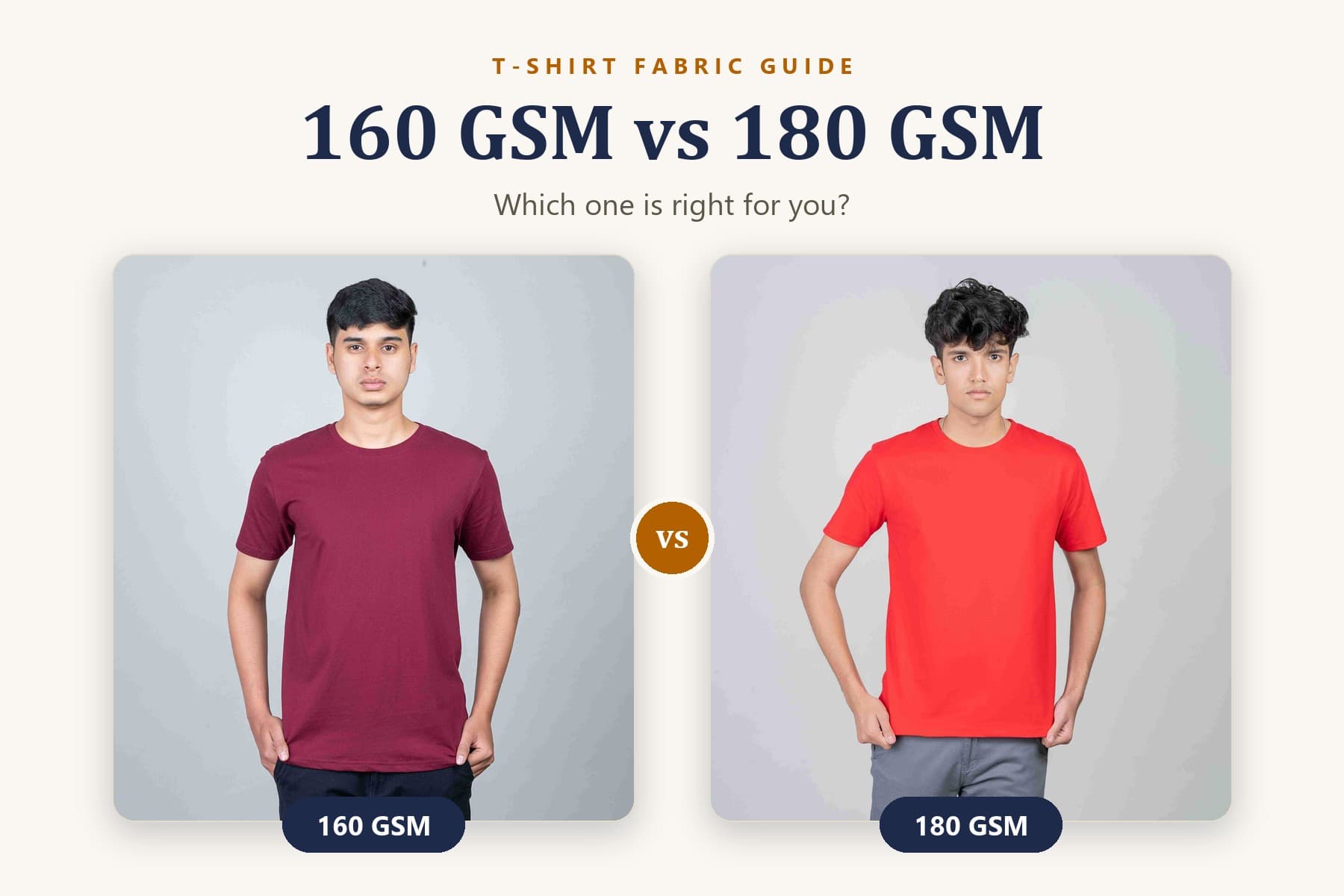
GSM (grams per square metre) measures fabric weight per square metre — a higher number means denser, heavier material, and a lower number means lighter, more breathable fabric. Once you know a t-shirt's GSM, you can predict a lot about how it will actually behave on your body and in your wardrobe.
160 GSM: the everyday-light option
This weight sits at the lighter end of everyday wear. The fabric is noticeably soft against the skin, drapes naturally, and lets air move through it freely — which is exactly what you want for summer wear, workouts, and casual daily use. Durability holds up well for a regular washing routine of once or twice a week, though very frequent washing can cause the fabric to thin out over time. For printed tees, 160 GSM performs best with quality direct-to-garment or screen printing. Our 160 GSM range starts at ₹299.
180 GSM: the everyday-sturdy option
At this weight, the fabric has noticeably more body and structure — it holds its shape on a hanger without clinging or turning see-through. It resists pilling and keeps its shape after repeated washing, typically lasting 2–3 years with normal care. It's also the better choice for printed or embroidered designs, since the heavier base absorbs ink better and resists premature cracking. This weight suits office-casual settings, year-round wear, and branded merchandise. Our 180 GSM range starts at ₹420.
So which one should you buy?
If you move a lot, sweat a lot, or live somewhere hot, 160 GSM will feel noticeably more comfortable day to day. If you're looking for a t-shirt that holds up to years of regular wear and washing — or you want something sturdier for a branded or printed design — 180 GSM is the better investment. Buying in bulk for a team or event? 180 GSM tends to look better for longer under repeated handling.
Honestly, the best answer for most people is to own both: 160 GSM for the hottest days and workouts, 180 GSM for everything else.