 eSiddhi
What Is GSM in T-Shirts? Everything You Need to Know
eSiddhi Team · 26 September 2023
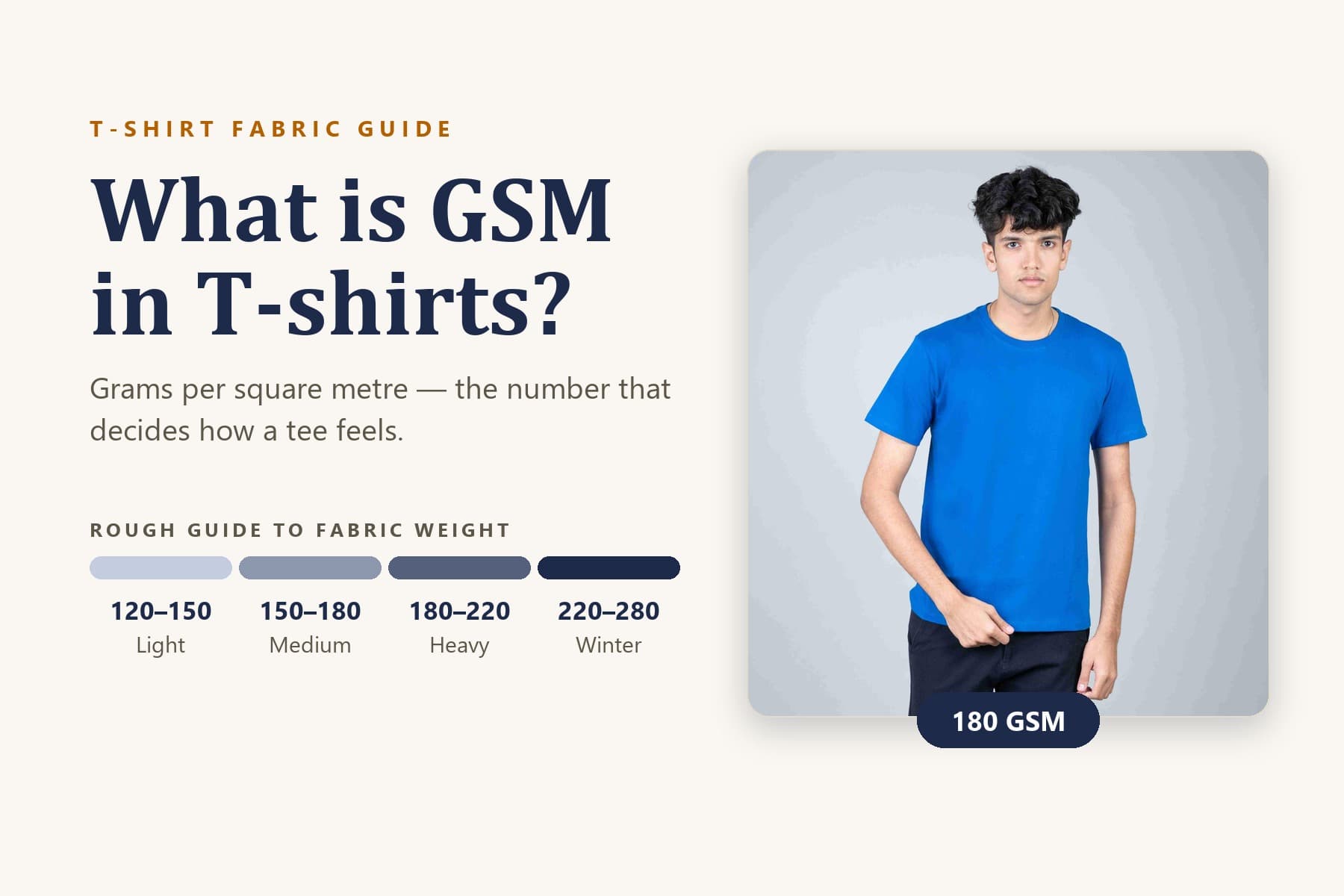
GSM stands for Grams per Square Metre. It measures fabric weight by calculating how many grams one square metre of the material weighs — a simple number that turns out to predict almost everything about how a t-shirt will feel and perform. Higher GSM means heavier, thicker fabric; lower GSM means lighter, more breathable material.
As a rough guide: 120–150 GSM is very light and airy. 150–180 GSM offers a medium-weight balance. 180–220 GSM provides a heavier structure. And 220–280 GSM delivers a very thick, premium winter-grade fabric.
Why does GSM matter when buying a t-shirt?
GSM works as an invisible quality indicator — it affects appearance, comfort, longevity, and even print quality. Lower-GSM fabrics can look see-through or cling to the body, while higher-GSM fabrics resist pilling and hold their shape through repeated washing. In practice, GSM is a big part of whether a t-shirt still looks good after fifty wears, not just the first five.
T-shirt GSM ranges, explained
Lightweight (120–150 GSM): ideal for hot climates and summer wear. These shirts maximize breathability, but can risk looking translucent and losing shape quickly.
Medium weight (150–180 GSM): this range balances comfort with durability, making it suitable for year-round everyday wear. Shirts in this range stay opaque while remaining breathable — it's the sweet spot most everyday basics live in.
Heavyweight (180–280 GSM): built for winter months and premium merchandise. These structured garments excel at durability and print quality, though they can feel like too much in real heat.
Which GSM is best for Indian weather?
It varies by region. Coastal cities benefit from 140–160 GSM because of the humidity. North Indian summers suit 150–170 GSM, while North Indian winters call for 180–240 GSM. South India tends to work well with 160–180 GSM year-round. For most Indian shoppers, 160–180 GSM is the most practical and versatile choice — light enough for daily wear, heavy enough to last.
How to check the GSM of a t-shirt
A few reliable ways: check the product description, read the care label, ask the retailer directly, or do a feel test — heavier fabric will noticeably resist stretching and feel more substantial in hand. A pinch test (gently pinching the fabric between two fingers) can also give you a rough sense of thickness, though the feel test is subjective and depends on the specific fabric and construction.
160 GSM vs 180 GSM: what eSiddhi recommends
If you're choosing between our two most popular weights: 160 GSM offers higher breathability and a lower price point, while 180 GSM provides superior durability and better print quality. Our general recommendation — choose 160 GSM for warm-weather casual wear, and 180 GSM if you want one t-shirt that works year-round and holds up to frequent wear.